

Apple may finally be ready to turn one of its longest-running rumors into reality.
According to reports from Bloomberg and other Apple-focused outlets, Apple’s smart glasses could launch in 2026, signaling a major shift in how people interact with technology in everyday life. If successful, Apple Glasses wouldn’t just be another wearable — they could quietly redefine how we use smartphones, notifications, and even navigation.
Apple has a long history of entering new product categories late — and then reshaping them entirely. Smart glasses may be next.
(Source: Bloomberg Technology – https://www.bloomberg.com/technology)
A Product Apple Has Been Preparing for Years
Apple’s work on augmented reality didn’t begin with Vision Pro. For more than a decade, the company has been filing AR-related patents, investing in custom silicon, and refining spatial computing software.
Publications like MacRumors have repeatedly reported on Apple’s experiments with micro-LED displays and lightweight optical systems designed specifically for smart glasses
(Source: https://www.macrumors.com).
The launch of Apple Vision Pro showed Apple’s long-term AR ambition — but smart glasses are expected to be the everyday version of that vision.
What Apple Smart Glasses Could Do in Real Life
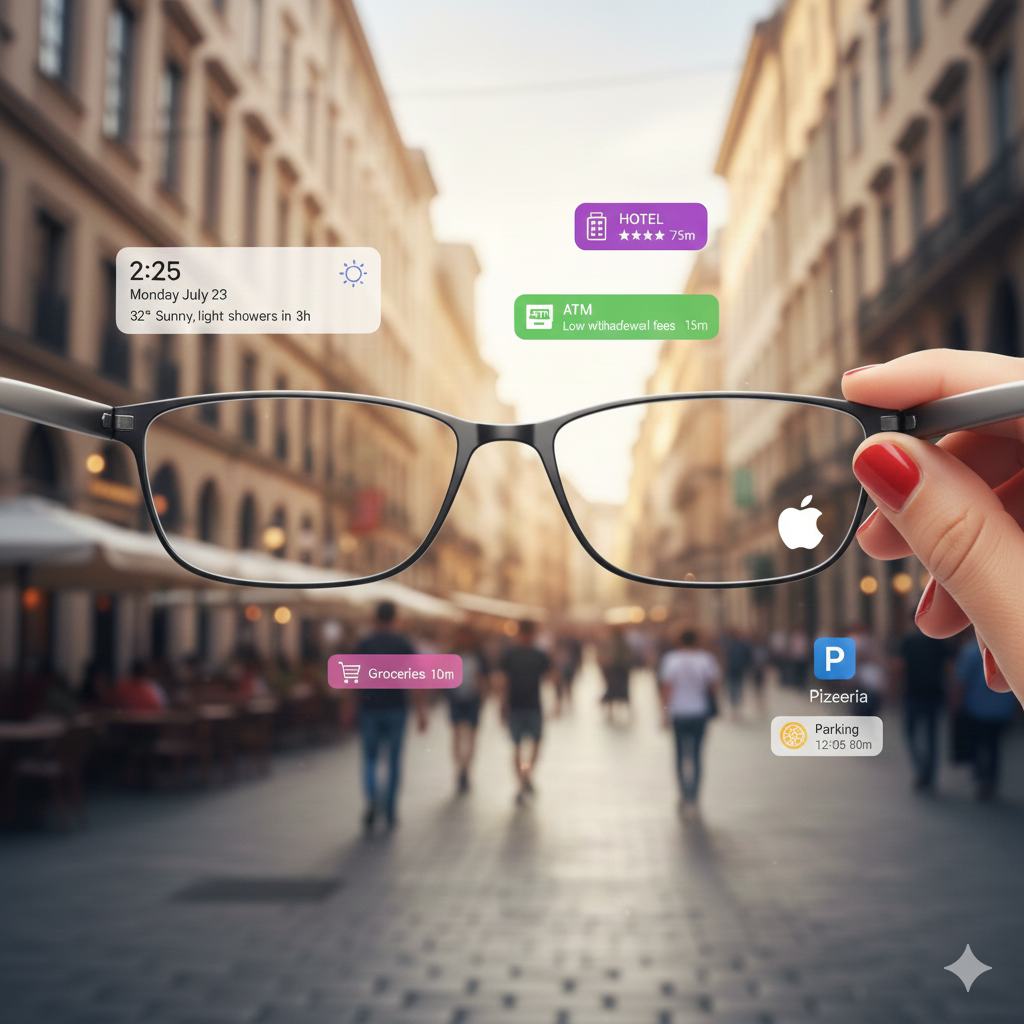
Rather than overwhelming users with screens, Apple is expected to focus on subtle, glanceable AR experiences.
According to The Verge, Apple wants future wearables to feel “invisible” — technology that blends naturally into daily life
(Source: https://www.theverge.com).
Potential real-world uses include:
- Navigation overlays while walking
- Notifications without pulling out a phone
- Voice-first interactions powered by Siri
- Context-aware information triggered only when needed
This approach aligns with Apple’s push toward reducing screen dependency, not increasing it.
Why Apple Is Waiting Until 2026
Smart glasses face serious technical challenges:
- All-day battery life
- Heat control
- Lightweight materials
- High-resolution displays small enough for lenses
Well-known analyst Ming-Chi Kuo, frequently cited by 9to5Mac, has suggested Apple is waiting for these technologies to mature before committing to mass production
(Source: https://9to5mac.com).
Apple’s strategy appears clear: wait until smart glasses feel ready, not experimental.
Apple vs Meta: Two Very Different Visions
Meta’s Ray-Ban smart glasses focus heavily on cameras, content creation, and social sharing, as outlined by Meta itself
(Source: https://about.meta.com).
Apple, however, is expected to take a different path:
- Less emphasis on cameras
- Stronger privacy controls
- Deep integration with iPhone, Apple Watch, and AirPods
As TechCrunch notes, Apple often succeeds by redefining why a product exists — not just how it works
(Source: https://techcrunch.com).
The Bigger Picture: Life After the Smartphone
Apple has never officially said it plans to replace the iPhone. But its roadmap increasingly points toward a future where:
- Wearables handle quick tasks
- Phones become less central
- Digital information blends seamlessly into the real world
Smart glasses could be the first real step toward that transition.
If Apple gets it right, 2026 may be remembered as the year personal computing quietly changed form.
Final Thoughts
Apple doesn’t chase trends — it waits until it can define them.
Smart glasses may not replace smartphones overnight, but Apple Glasses could begin a slow, natural shift toward a more ambient form of computing.
And when Apple moves, the rest of the industry usually follows.
Apple’s smart glasses may launch in 2026. Explore leaks, features, pricing rumors, and why Apple is betting big on AR.